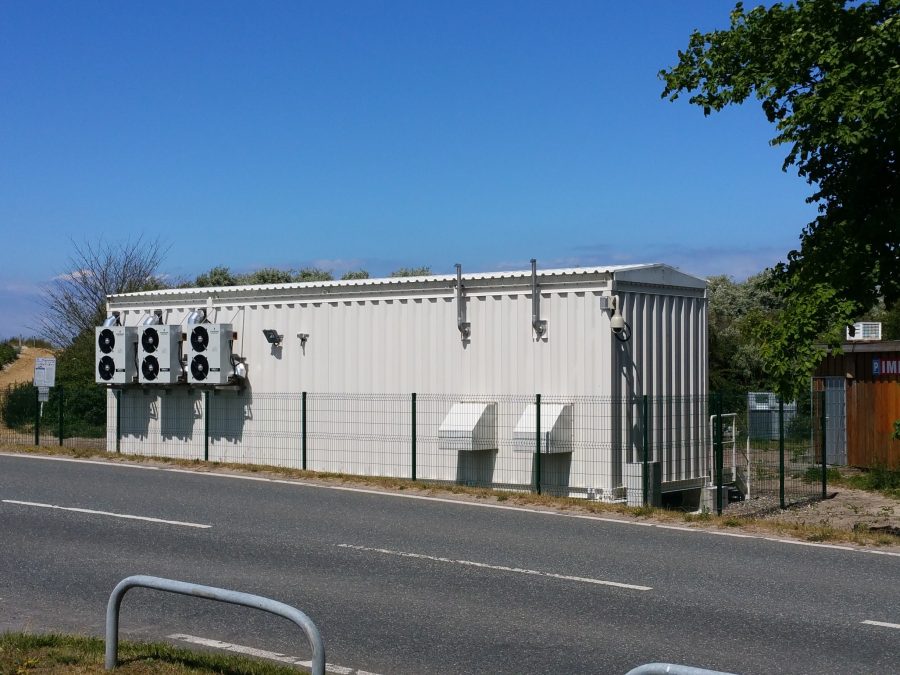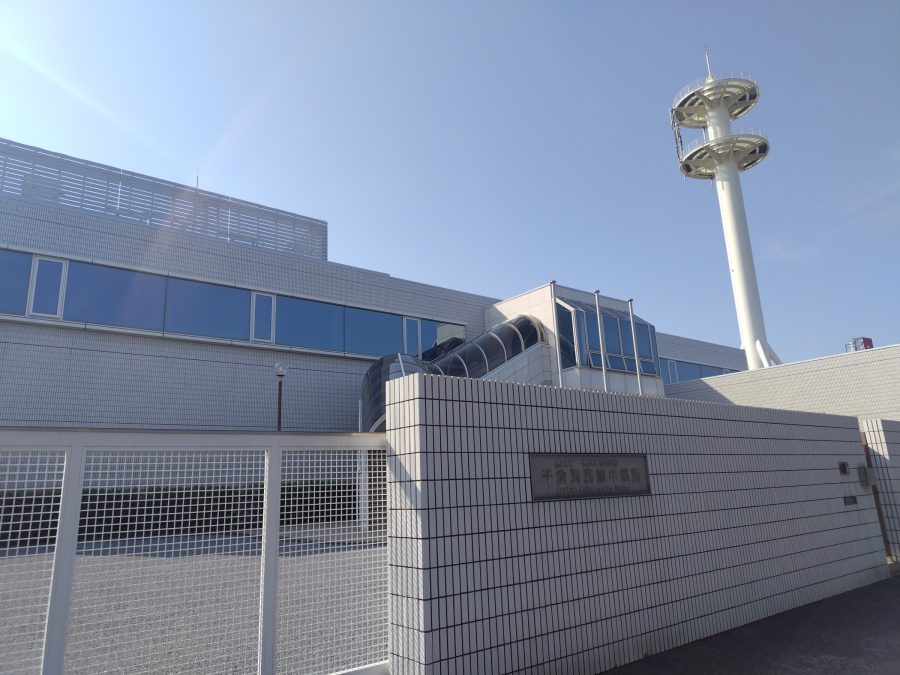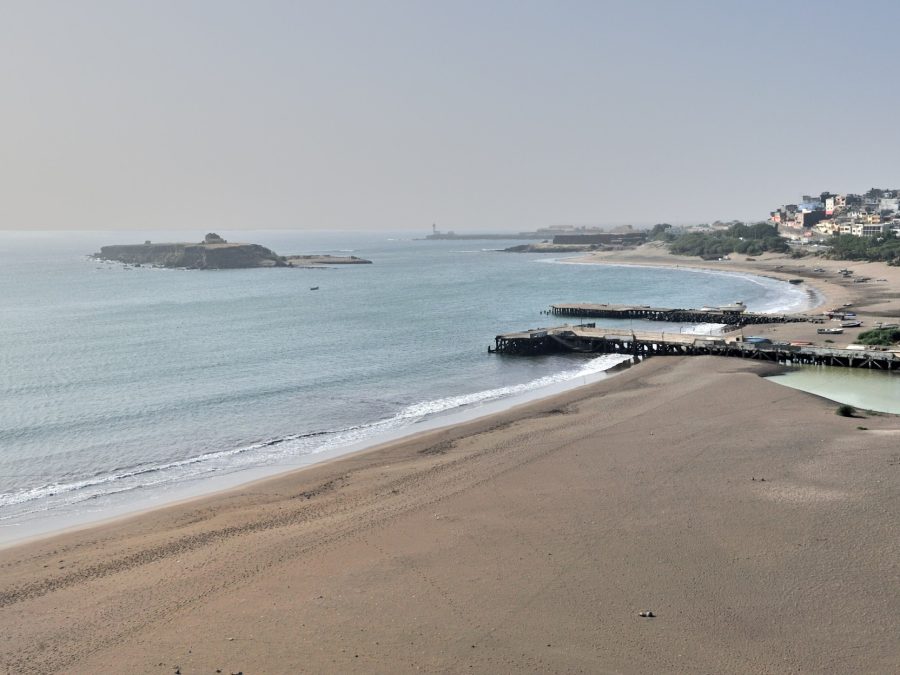
Tradewind Express is Current’s transpacific trunk, running from a landing point in Hermosa Beach, California to Chikura, Japan, with a branching unit roughly a third of the way across that drops a spur south to Piti, Guam — a deliberate design choice that lets the same trunk serve both the primary US–Japan capacity market and the secondary Guam interconnection hub that several regional carriers depend on.
At 9,100 km it’s the longest system in Current’s portfolio, crossing some of the deepest water any of our cables touch — the Mariana Trench region runs along part of the route corridor, which pushed cable selection toward a lightweight, high-tensile-strength deep-water design for the mid-ocean sections and drove route engineering to stay well clear of the trench’s steepest slopes, where landslide risk to a laid cable is measurably higher.
The system carries 12 fiber pairs at a combined 360 Tbps design capacity. Unlike Meridian-1, Tradewind Express is a four-party consortium system: Current holds the lead operator and majority capacity position, with three hyperscale cloud providers holding the remaining ownership stakes and their proportional share of fiber pairs — a common structure for the highest-cost, longest-haul routes, where sharing initial capital cost against guaranteed anchor demand is what makes the economics work for everyone at the table.
Branching-unit maintenance on a three-landing-point system is meaningfully more complex than a simple point-to-point cable, and Tradewind Express was one of the drivers behind expanding our Pacific-based maintenance fleet capacity in 2022.