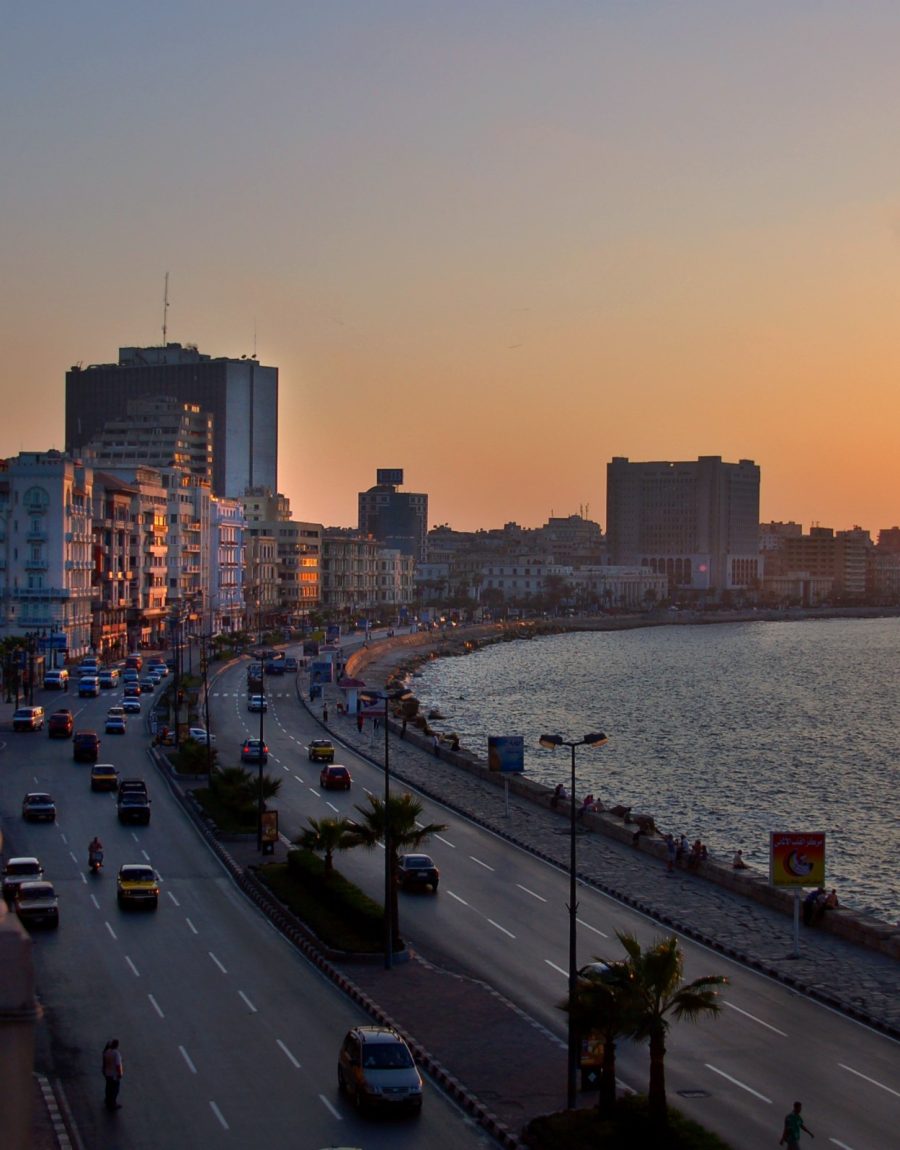
Kestrel Route addresses one of the more structurally awkward corridors in global subsea planning: connecting the Mediterranean to the Arabian Sea inevitably means crossing land, since there is no all-marine path between the two that avoids either the Suez Canal’s dense, congested cable corridor or a much longer route around Africa. Kestrel Route takes the direct approach — a submarine segment from Marseille to Alexandria, Egypt, a roughly 300 km terrestrial fiber crossing to Egypt’s Red Sea coast, and a second submarine segment on to Fujairah, UAE.
The terrestrial crossing is the single largest route-risk factor in the system’s design, and it’s the reason Kestrel Route is built with fully diverse duct routing across two physically separated terrestrial corridors between the Mediterranean and Red Sea landing points — a single-corridor terrestrial crossing has historically been the cause of some of the most severe multi-cable outage events in this part of the world, and we engineered against repeating that failure mode rather than accepting the cheaper single-corridor build.
The system carries 10 fiber pairs at 240 Tbps combined design capacity across its full submarine length. Kestrel Route is a consortium build, with Current as lead partner alongside two regional carrier partners who each hold a fiber-pair allocation and a stake in the Egyptian terrestrial crossing infrastructure specifically.
Kestrel Route is scheduled for ready-for-service in 2026; the submarine segments are laid and commissioned, with final terrestrial-crossing acceptance testing the remaining milestone before commercial service begins.